
Boundaries & Land Rights
An Old Fence, a Missing Element: Hearn Properties v. Cruce
A Madison County fence dispute shows why the history of a line matters, and why its age alone could not establish a Florida boundary by acquiescence.
On This Page
An old fence has a way of looking authoritative. It is there on the ground, easy to follow and often older than anyone’s memory of the property. In a boundary dispute, however, its age is only the beginning of the story. What was the fence built to do, and what did the owners understand it to mean?
Those questions were central to Hearn Properties, Inc. v. Cruce, a Florida case involving 3.61 acres between an old agricultural fence and a surveyed line. The trial court accepted the fence as the boundary. On August 26, 2009, the First District Court of Appeal reversed that judgment. Its reason was more specific, and more useful, than a rule that either old fences or new surveys always win.
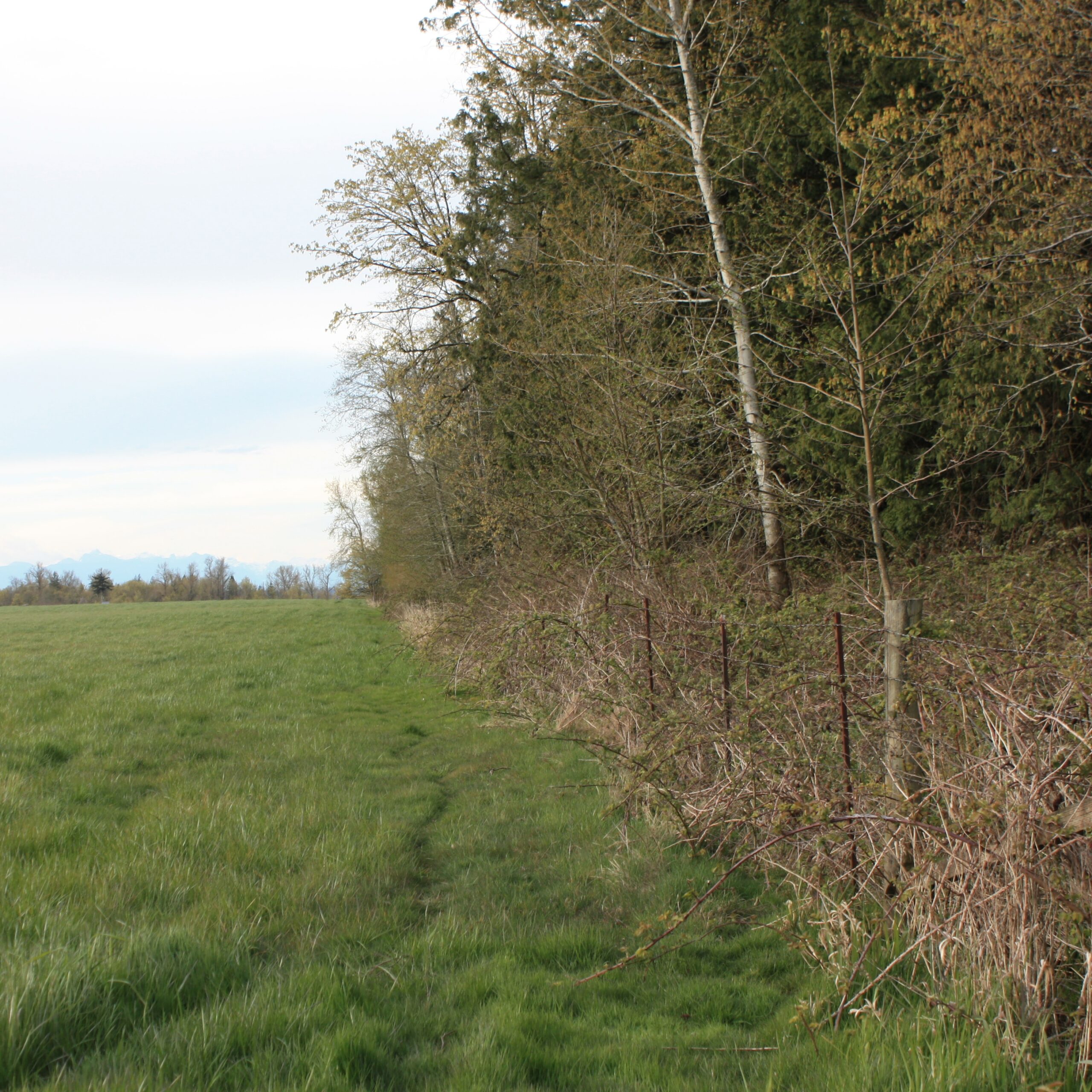
Photograph by Feedmepaperr, Wikimedia Commons, CC BY-SA 4.0. Uncropped; resized by WordPress for display.

A farm before a boundary
The case came from Madison County in north Florida. According to the appellate opinion, pages 3–4, the properties had once belonged to I.D. and Mattie O’Quinn, the grandparents of Albert Wilford Cruce. They raised livestock and crops, and the fence helped separate those uses. The northern parcel was sold in 1960 to a predecessor of Hearn Properties. Cruce’s mother, Mattie Frances Cruce, bought the southern parcel from her parents in 1964. When she died in 1989, Cruce and other heirs inherited it.
After Hearn acquired the northern property, it began building a fence along the line its surveyor had marked. Cruce maintained that the boundary lay farther north, along the older fence running parallel to that survey line. The disputed strip lay between them. A quiet-title action followed: a lawsuit asking the court to resolve the competing ownership claims.
The fence’s original job mattered. As far as the appellate record revealed, the O’Quinns owned the land on both sides when it was built. A fence used within one agricultural holding does not, simply by existing, demonstrate that neighboring owners were uncertain about their common boundary. There were not yet separate owners on opposite sides whose dispute it could have settled.
What acquiescence required
Cruce initially advanced several legal theories, including boundary by agreement and adverse possession under color of title. By the bench trial, where a judge rather than a jury decided the case, only boundary by acquiescence remained. The appeal therefore needs to be read in that procedural setting, rather than as a verdict on every possible claim involving an old fence.
Boundary by acquiescence concerns the legal significance of owners’ acceptance of a particular line under defined circumstances. Drawing on Shaw v. Williams, 50 So. 2d 125 (Fla. 1950), Hearn identified three distinct elements: uncertainty or a dispute about the true boundary; the parties’ location of a boundary line; and acquiescence in that location for the prescriptive period. That last expression refers to the legally required period of time. Duration was not the contested element in this appeal.
The missing piece was the first one. The trial court found no direct evidence of uncertainty or dispute, but relied on earlier First District decisions to infer it from the fence’s placement and duration. Under that reasoning, the fence itself could supply the necessary uncertainty when no other explanation accounted for its location.
The appellate court rejected that shortcut. It relied on the Florida Supreme Court’s decisions in Shaw and Van Meter v. Kelsey, 91 So. 2d 327 (Fla. 1956), which required more than the existence of the physical barrier. In particular, Shaw required mutual uncertainty or an actual dispute: the relevant uncertainty meant both landowners lacked knowledge of the true line. The fact that later owners litigated did not fill that historical gap. See opinion pages 4–6.
I like the discipline in that distinction. A fence can be compelling evidence, but we still have to ask what it is evidence of. Keeping livestock out of crops and settling an uncertain property boundary are different purposes, even when both leave a line on the landscape.
Why the full court sat
There is another reason this short opinion deserves careful reading. The First District sat en banc, meaning the full court considered the case rather than the usual three-judge panel. It was correcting its own precedent.
Earlier First District cases, particularly McDonald v. O’Steen and McDonald v. Givens, had allowed the fence-based inference. The trial judge’s approach had support in those decisions. But the appellate court concluded that their holdings could not be reconciled with the older, controlling Florida Supreme Court opinions. It receded from those decisions and other decisions treating mere fence construction as sufficient to establish a boundary by agreement or acquiescence. The final judgment was reversed. See opinion page 8.
That sequence matters when researching a boundary problem. Finding a reported case that seems to support a proposition is not the end of the research. The court that issued it, the particular question it decided, and later treatment of its reasoning all matter. Here, the appellate court expressly explained why its earlier approach could no longer be followed.
Three doctrines that should stay distinct
Acquiescence was the theory tried in Hearn. It required the three elements just described. Long acceptance of a line did not dispense with the need to establish the required uncertainty or dispute.
Agreement concerns owners settling an uncertain or disputed boundary on an agreed line, followed by occupation according to it. That is not a general permission to transfer land by an informal conversation. The distinction appears in Francis v. Stubbs, a Fourth District opinion filed December 30, 2009, which discussed both agreement and acquiescence.
In Francis, the homeowner alleged a specific earlier boundary dispute, an agreement recognizing the fence, and subsequent treatment of it as the line. The appellate court reversed dismissal of her complaint and summary judgment for her neighbors despite the deed’s allegedly unambiguous description. It sent the case back for further proceedings; it did not finally award the disputed land to the homeowner. That is a useful companion to Hearn: the historical facts alleged and the stage of the lawsuit make a real difference.
Adverse possession has its own requirements. Florida’s section 95.16 addresses possession under color of title, involving a qualifying written instrument, judgment or decree and the statutory conditions. Section 95.18 addresses possession without color of title and includes tax-payment and return requirements as well as possession requirements. These references are to the 2026 statutes. A fence may be relevant to possession, but its existence alone does not establish compliance with either statute. Hearn should not be read as a substitute for that separate analysis.
Reading Hearn alongside Cooley
Thomas Cooley’s discussion of the surveyor’s judicial functions asks surveyors to take longstanding evidence and settled rights seriously. Hearn supplies a useful Florida-specific limit on a casual reading of that idea. Respect for occupation does not make every old occupied line a legally established boundary.
These writings operate at different levels. Cooley’s essay explains a professional approach to evidence and stability; the Florida opinion applies a particular legal doctrine to a particular record. Treating them as rival slogans, one favoring the old fence and the other favoring the survey, would obscure what each can teach.
For the surveying reader, the interesting work lies in reconstructing the line’s history: its physical position, its original purpose, the sequence of ownership and the evidence of what adjoining owners actually recognized. Those questions help distinguish a surviving boundary monument from a convenient enclosure. The opinion does not provide the surveyor’s complete field record, so it would be speculation to attribute the result to a particular instrument, measurement accuracy or retracement technique.
My takeaway is that old evidence deserves patient attention without automatic deference. In Hearn, the old fence told part of the property’s story. The mistake was asking its mere presence to tell the rest.
Sources and further reading
Hearn Properties, Inc. v. Cruce, 20 So. 3d 877 (Fla. 1st DCA 2009) (en banc), official eight-page opinion, case 1D07-1538. Pages 3–4: facts and procedural posture; pages 4–6: elements and missing uncertainty; pages 7–8: treatment of prior decisions and reversal.
Francis v. Stubbs, Florida Fourth District Court of Appeal, cases 4D08-2405 and 4D08-4300, December 30, 2009. Pages 1–2: allegations, doctrine and reversal for further proceedings. The discussion above distinguishes allegations from adjudicated facts.
Florida Statutes §95.16 and §95.18, 2026 text. These are separate adverse-possession provisions, not the three-element acquiescence test.
Related: Small Mark, Big Meaning: Survey Monuments and Reading the Old Plats.
This article is educational editorial commentary, not legal advice. Boundary disputes depend on the facts, jurisdiction and applicable law. A qualified attorney and licensed surveyor should evaluate questions about a particular property.